
Multi-cloud vulnerability management and CSPM
Vulnerability management and compliance control for AWS, Azure, and Google Cloud: continuously assess, monitor, and improve the security posture of your cloud environments. Cloud VM scanning, security for your Kubernetes environments, and registry container image analysis.
Multi-cloud challenges

Resource proliferation
Thousands of resources scattered across multiple clouds with no centralized inventory.

Misconfigurations
Failed security settings and undetected configuration drift.

Multi-cloud complexity
Fragmented tools, divergent standards, and inconsistent access management.
Cloud attack surface
Cloud Attack Surface Management
Automatically discover and catalog all your cloud resources via native APIs.
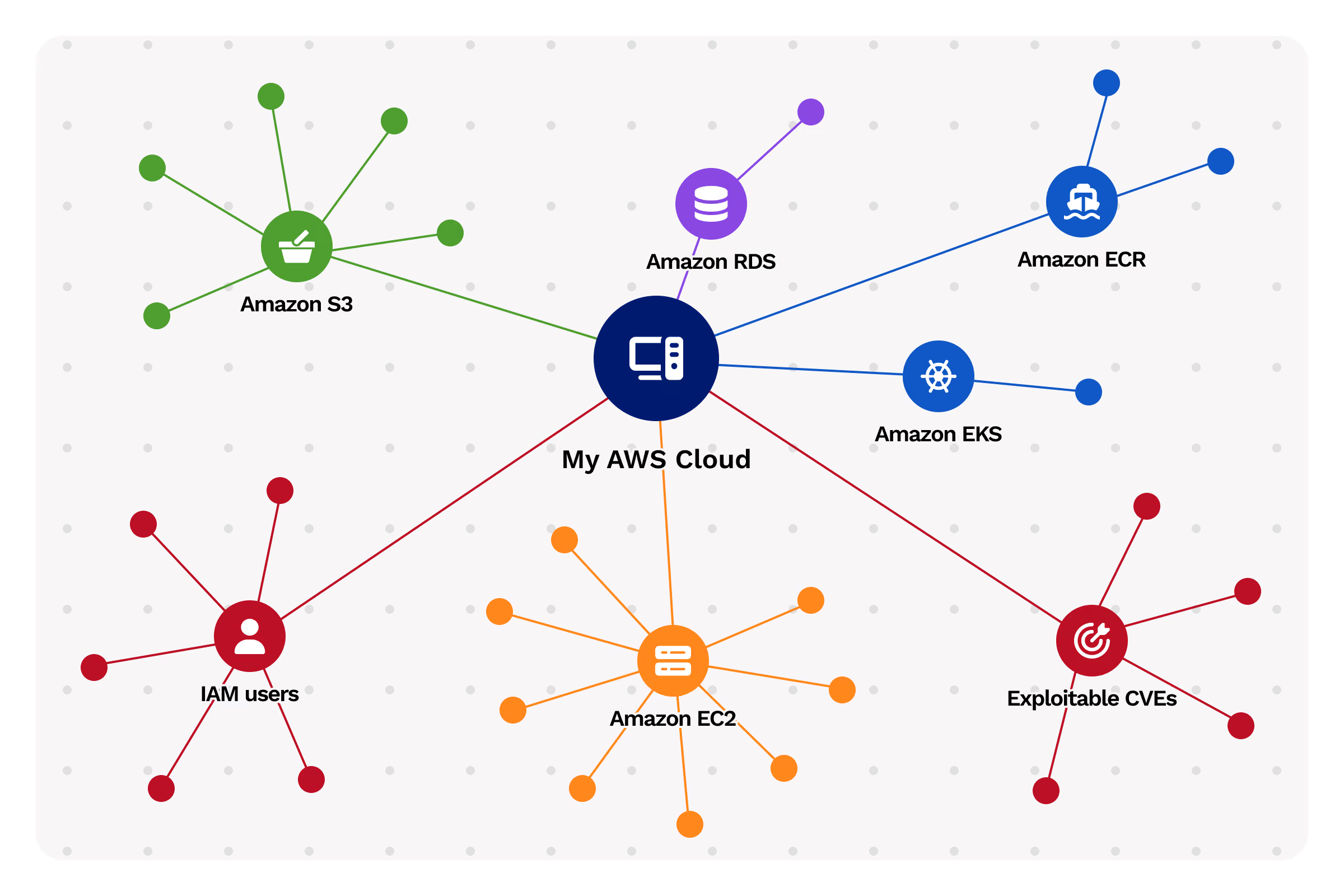
Automatic discovery
Real-time synchronization across all environments
- Item 1
- Item 2
- Item 3
Unified view
Centralized multi-cloud and multi-region dashboard
- Item 1
- Item 2
- Item 3
Traceability
Complete history of configuration changes
- Item 1
- Item 2
- Item 3
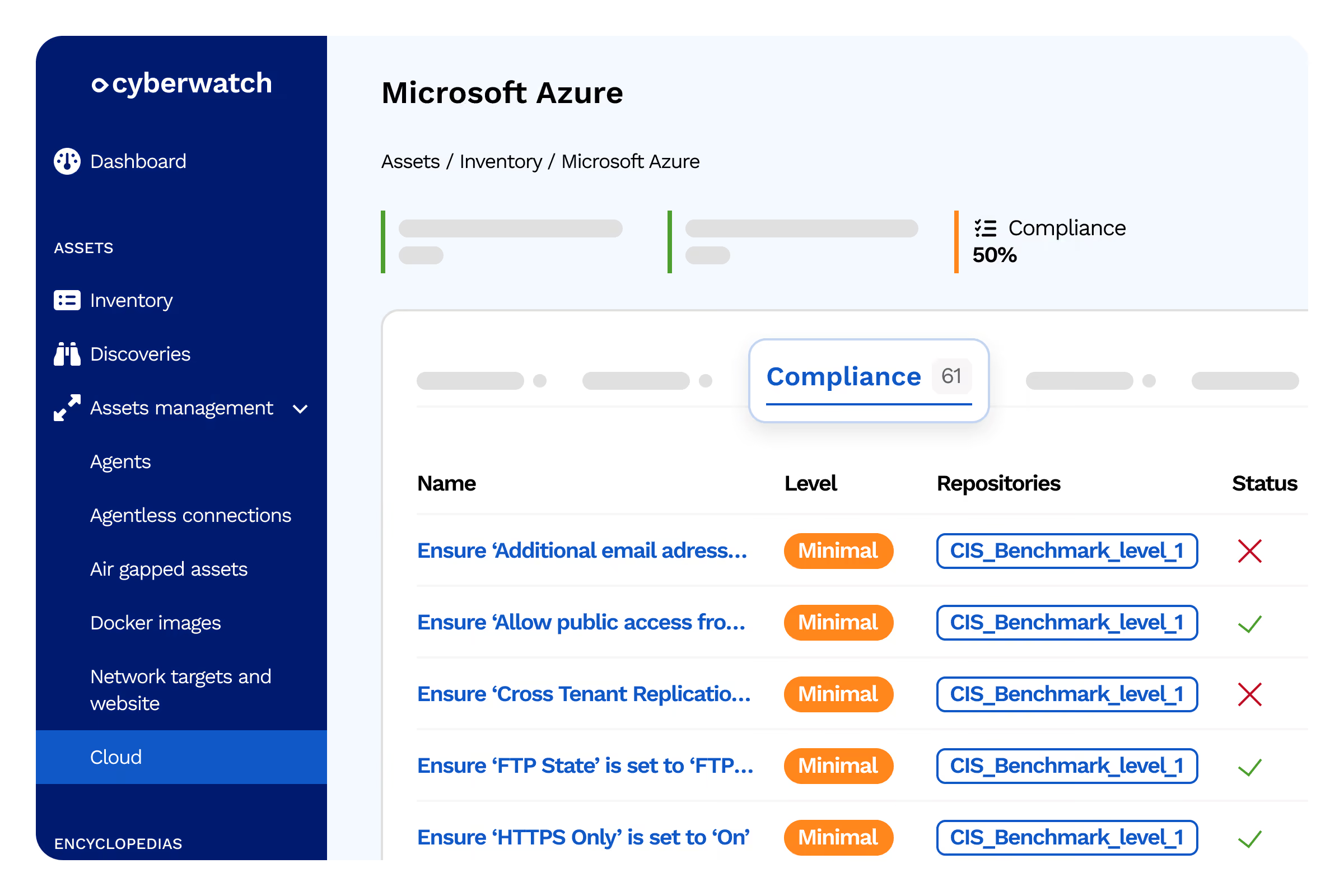
CSPM
CSPM (Cloud Security Posture Management)
Detect misconfigurations based on CIS benchmarks and security best practices.
CIS Benchmarks
Compliance with recognized standards for AWS, Azure, and GCP
- Item 1
- Item 2
- Item 3
Guided remediation
Detailed corrective actions for every violation
- Item 1
- Item 2
- Item 3
Continuous reporting
Track security posture over time
- Item 1
- Item 2
- Item 3
cloud infrastructure scan
Scan your cloud infrastructure
Scan your virtual machines and cloud containers with the same level of detection as in an on-premises environment.
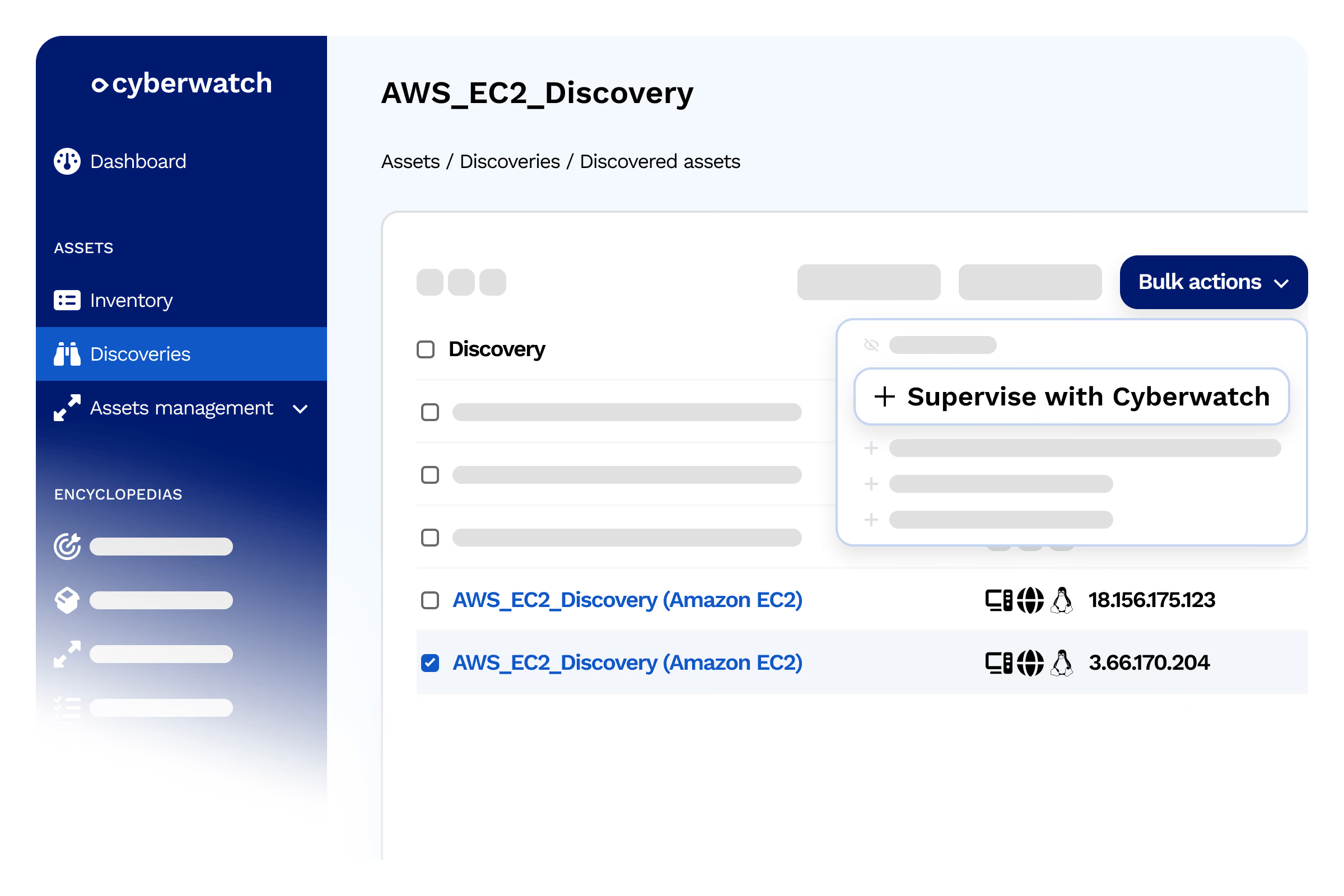
Virtual machines
Agentless installation
Native access via AWS, Azure, and GCP APIs
- Item 1
- Item 2
- Item 3
Complete inventory
Dependencies, OS, services, and software versions
- Item 1
- Item 2
- Item 3
Detailed reporting
Patch recommendations per VM
- Item 1
- Item 2
- Item 3
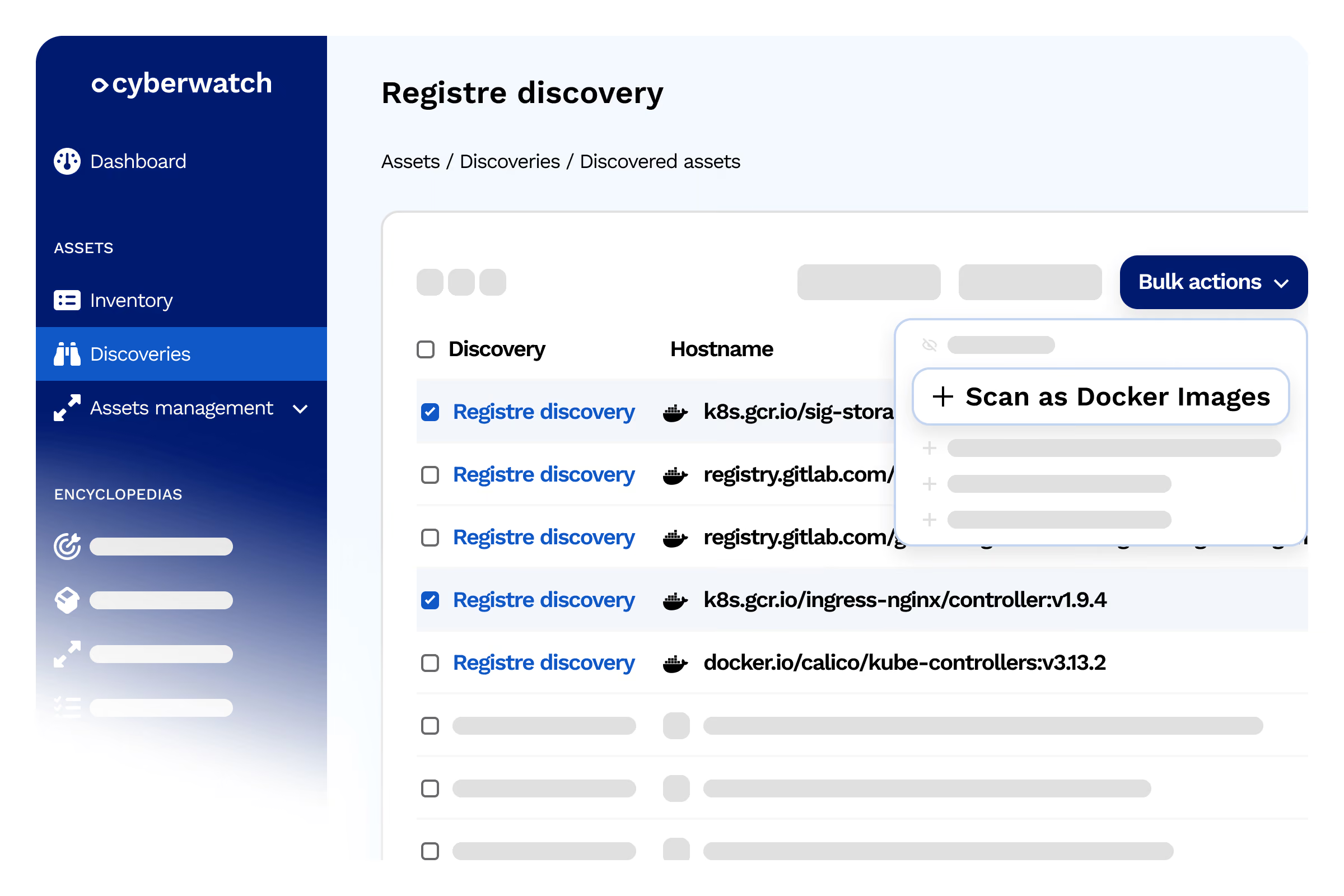
Registry containers
Registry integration
Native support for ECR, ACR, GCR, and Docker Hub
- Item 1
- Item 2
- Item 3
Deployment blocking
Vulnerability threshold policies
- Item 1
- Item 2
- Item 3
Automated SBOM
Image dependency inventory
- Item 1
- Item 2
- Item 3
Testimonials
The platform centralizes both our PCI compliance for online billing operations and our broader IT vulnerability management, which simplifies our security oversight.

CISO, energy
CISO

Quarterly ASV scans and the supplementary pentest provide us with a comprehensive view of our PCI DSS compliance, with reports that are directly actionable for our QSA auditors.
Payment Security Manager, Finance
Payment Security Manager
Hardening our configurations according to CIS Benchmarks allowed us to close entry points we hadn't even considered, all without interrupting our production.
Systems Administrator, industry
Systems and Network Administrator
Continuous auditing of our Active Directory revealed several poorly managed privileged accounts, which we were able to remediate quickly.
CISO, healthcare
CISO
Pouvoir déployer une console complète isolée d'Internet, avec mise à jour manuelle de la base de vulnérabilités, était un prérequis pour certains de nos environnements les plus critiques.
Exemple à remplacer — Responsable sécurité, secteur public
Responsable sécurité des systèmes d'information
Le mode air-gap totalement déconnecté correspond exactement à nos exigences de sécurité pour les systèmes les plus sensibles, sans compromis sur la qualité de la détection.
Exemple à remplacer — Responsable SSI, défense
Responsable de la sécurité des systèmes d'information
Le suivi de notre conformité NIS2 est désormais centralisé et actualisé en continu, ce qui simplifie considérablement nos rapports aux autorités compétentes.
Exemple à remplacer — RSSI, énergie
RSSI
La génération automatisée de preuves d'audit nous fait gagner un temps précieux lors de nos revues de conformité DORA et de nos échanges avec nos auditeurs.
Exemple à remplacer — Responsable conformité, finance
Responsable conformité
La formation Cyberwatch Certified Professional a permis à nos équipes de monter en compétence rapidement et d'exploiter pleinement les fonctionnalités de remédiation de la plateforme.
Exemple à remplacer — Responsable IT, industrie
Responsable infrastructure IT
Le patch management intégré et les tickets générés automatiquement dans notre outil ITSM ont nettement réduit nos délais de correction.
Exemple à remplacer — DSI, secteur public
DSI
Avec des centaines de dispositifs médicaux à surveiller, la priorisation par criticité métier nous permet de ne pas nous disperser tout en respectant la continuité des soins.
Exemple à remplacer — RSSI, santé
RSSI
Le scoring contextuel nous aide à concentrer nos équipes sur les vulnérabilités qui présentent un risque réel pour nos installations, plutôt que de traiter des milliers de CVE sans distinction.
Exemple à remplacer — Responsable cybersécurité, énergie
Responsable cybersécurité
Pouvoir cartographier nos environnements sensibles sans connexion réseau permanente était une exigence non négociable. Cyberwatch répond à cette contrainte tout en gardant un inventaire à jour.
Exemple à remplacer — Officier sécurité, défense
Officier de sécurité des systèmes d'information
La cartographie automatique de nos actifs nous a permis de découvrir des serveurs oubliés que nos audits précédents n'avaient jamais identifiés. C'est un vrai gain de visibilité sur notre Shadow IT.
Exemple à remplacer — Responsable sécurité, finance
Responsable sécurité IT
L'accompagnement de l'équipe Cyberwatch a été déterminant pour déployer la plateforme sur nos sites de production sans perturber nos lignes. Le support dédié répond vite et comprend nos contraintes industrielles.
Exemple à remplacer — DSI, industrie
DSI
Avec Cyberwatch, nous avons enfin une vue exhaustive de notre parc informatique et pouvons prioriser nos actions de remédiation selon un risque réel plutôt qu'une simple liste de CVE. La plateforme s'intègre bien à nos contraintes de souveraineté.
Exemple à remplacer — RSSI, secteur public
RSSI
FAQ
From asset mapping to automated remediation.
What is CSPM (Cloud Security Posture Management)?
CSPM is an approach that automatically detects misconfigurations and security drifts in your cloud environments by comparing them against CIS benchmarks and industry best practices. Rather than a one-time audit, CSPM continuously monitors the security posture of your AWS, Azure, Google Cloud, or OpenStack resources.
Does Cyberwatch work across multiple cloud providers simultaneously?
Yes, Cyberwatch natively covers AWS, Azure, Google Cloud, and OpenStack via their respective APIs. The platform centralizes the inventory and security posture of all your environments into a single view, eliminating the tool fragmentation and divergent standards typical of traditional multi-cloud management.
What is the difference between scanning a cloud VM and scanning on-premises servers?
Cyberwatch applies the same high-quality vulnerability scanning to cloud virtual machines as it does to on-premises servers, without compromising on analysis depth. Discovery and data collection rely on native cloud APIs rather than traditional agents, simplifying large-scale deployment.
How does Cyberwatch secure containers and Kubernetes?
Cyberwatch scans container images from your registries and runtime environments, both before and after deployment, to identify software vulnerabilities and track embedded components. The platform extends this analysis to workloads, Kubernetes clusters, and cloud environments to detect security risks, configuration drift, and vulnerabilities across your entire infrastructure.
Does CSPM replace a traditional vulnerability scanner?
No, the two approaches are complementary. CSPM focuses on identifying misconfigurations, compliance gaps, and risks related to cloud security posture. Vulnerability scanning, on the other hand, detects known software flaws, such as CVEs, present on systems, virtual machines, container images, and workloads. Cyberwatch combines these capabilities within a single platform to provide a unified view of cloud risks and facilitate their prioritization.
How does the CSPM integrate with other Cyberwatch modules?
Cloud resources discovered by the CSPM are integrated into the centralized Cyberwatch inventory, alongside endpoints, internet-facing assets, web applications, SBOMs, and application dependencies. This approach allows you to correlate cloud configurations, vulnerabilities, external exposures, and application risks in a unified view, while simplifying compliance tracking for NIS2, DORA, CRA, or ISO 27001 requirements.