
Vulnerability remediation and patch management
Detection without remediation does not reduce risk. Cyberwatch includes native patch management and orchestrated remediation tools to move from a list of vulnerabilities to concrete action: deploying patches, prioritizing action plans, and tracking resolution through to completion.
The gap between detection and remediation: the real problem
Most organizations are good at detecting their vulnerabilities. The challenge is fixing them. Operational teams are buried in tickets, maintenance windows are rare, application dependencies hinder updates, and no one knows if the patch was actually applied.
Result: critical vulnerabilities remain open for weeks or even months. It is during this window between detection and remediation that attackers operate.
Shadow IT / OT

Unlisted equipment connected to the network without supervision acts as an invisible gateway for attackers.
Outdated manual inventories

Excel files and self-reported inventories never reflect the reality on the ground. Gaps widen with every maintenance intervention.
Strict regulations

NIS2, LPM, and IEC 62443 regulations require an up-to-date inventory of critical industrial assets, complete with traceability and audit trails.
patch management
Integrated patch management
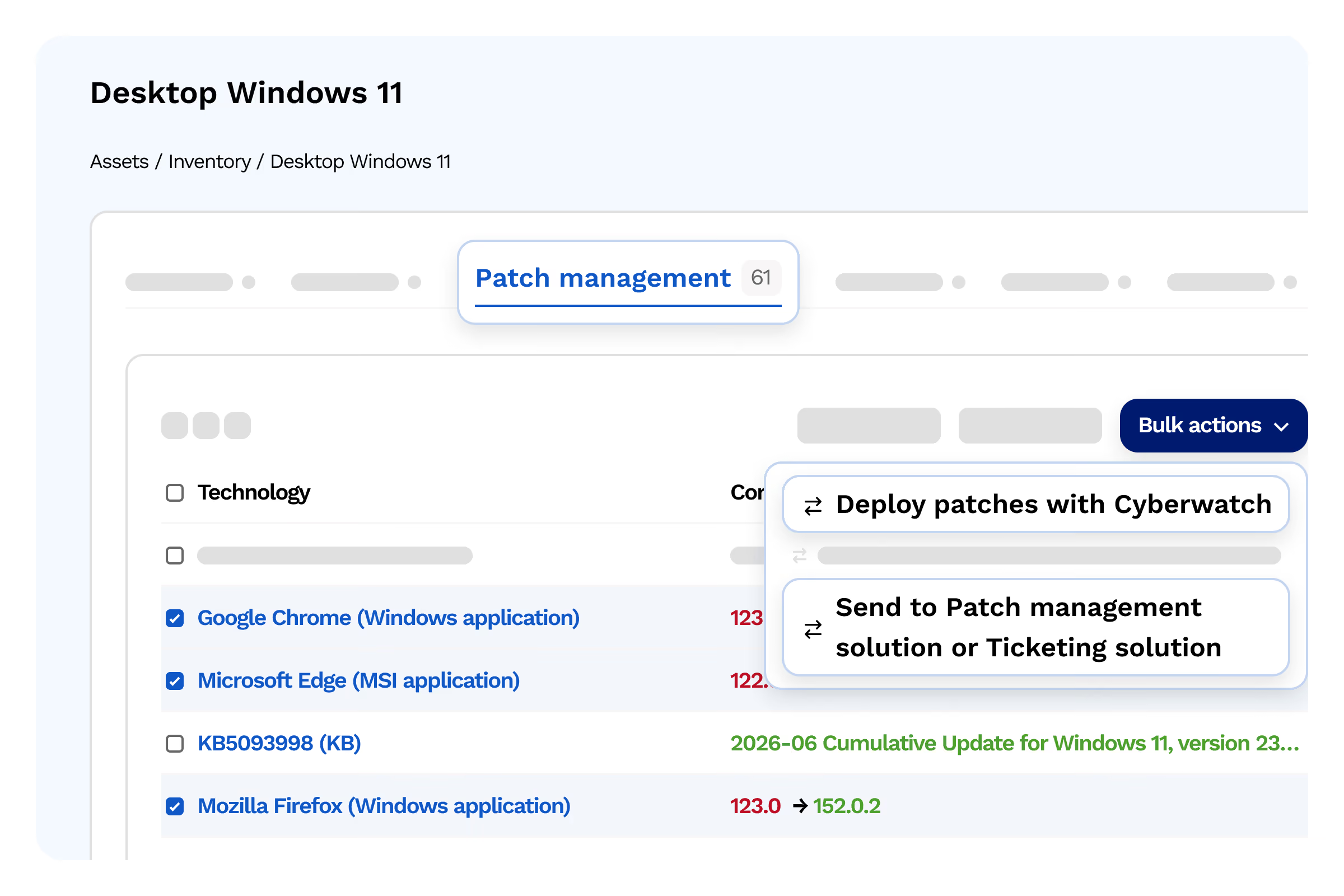
Deploy patches directly from Cyberwatch
Patch deployment
Deploy Windows and Linux security updates directly from the platform, to targeted assets or by group
Deployment scheduling
Schedule deployments during your maintenance windows, by scope, with prior validation
Targeted patching
Deploy only the patches that resolve identified critical vulnerabilities, avoiding uncontrolled mass updates
Post-deployment verification
A control scan automatically verifies that the patch has been successfully applied and the vulnerability is resolved
remediation plan
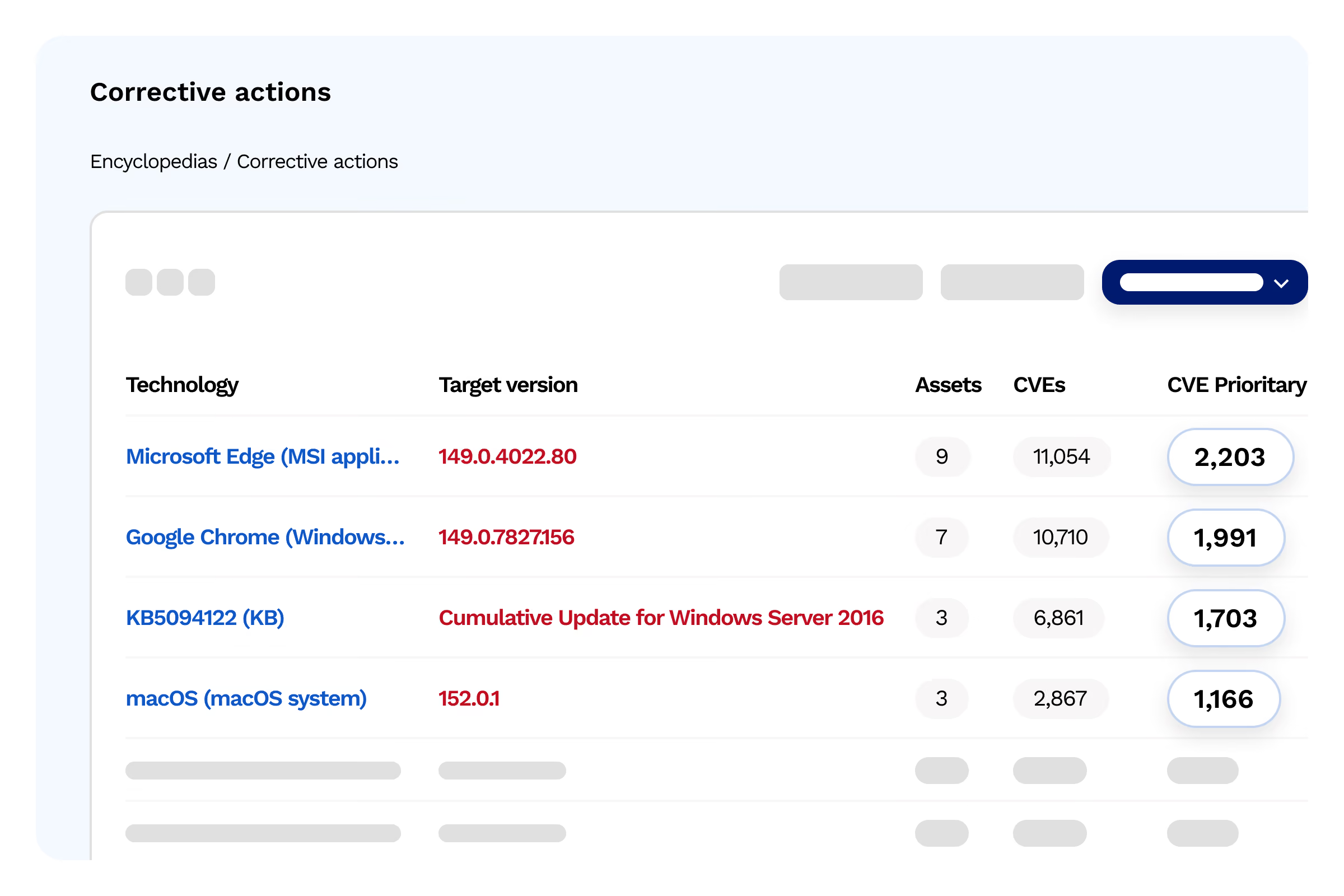
Prioritized remediation plans
When patching is not immediately possible (due to application constraints, legacy systems, or OT environments), Cyberwatch generates alternative remediation plans.
Prioritized action plans
Ordered lists of actions to be taken by criticality, including the number of vulnerabilities resolved by each patch
- Item 1
- Item 2
- Item 3
Compensating controls
When a patch does not exist or cannot be deployed, Cyberwatch provides compensating controls (service deactivation, firewall rules, configuration).
- Item 1
- Item 2
- Item 3
Documented risk acceptance
Accept the risk of a vulnerability with justification, owner, and expiration date for audit traceability.
- Item 1
- Item 2
- Item 3
itsm
ITSM orchestration and integration
Automatic ticket creation
Generate remediation tickets in Jira, ServiceNow, GLPI, or your ITSM. Ticket content is fully customizable and can include the list of vulnerabilities, the affected asset, remediation procedures, and priority levels.
WAPT and CoreUpdate integration
Connect Cyberwatch to your asset management tools: WAPT and CoreUpdate. Trigger deployments directly from your existing workflow.
Monitoring and reporting
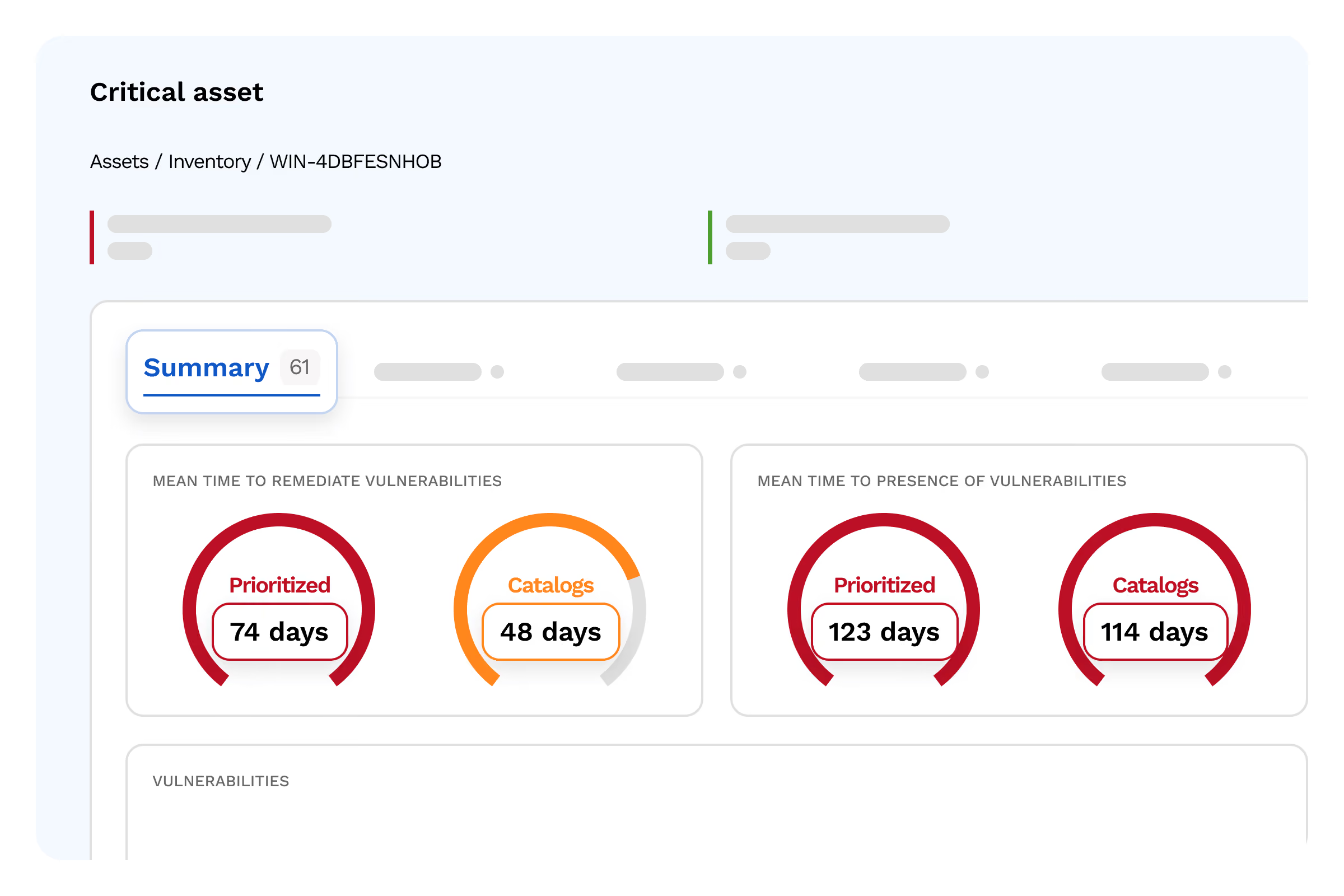
Track your correction rate, remediation SLAs, MTTR (Mean Time To Remediate), and how your exposure evolves over time. Automated reports for management.
Remediation is the step that tangibly reduces your attack surface—without it, detection is merely an observation.
Testimonials
La formation Cyberwatch Certified Professional a permis à nos équipes de monter en compétence rapidement et d'exploiter pleinement les fonctionnalités de remédiation de la plateforme.

Exemple à remplacer — Responsable IT, industrie
Responsable infrastructure IT

Le patch management intégré et les tickets générés automatiquement dans notre outil ITSM ont nettement réduit nos délais de correction.
Exemple à remplacer — DSI, secteur public
DSI
FAQ
From asset mapping to automated remediation.
Why is it necessary to orchestrate vulnerability remediation?
Most organizations are good at detecting their vulnerabilities but struggle or delay in fixing them due to backlogged tickets, infrequent maintenance windows, and complex application dependencies. This gap between detection and remediation, which can last for weeks, is the prime window of opportunity for attackers, making the orchestration of remediation just as critical as detection itself.
How does Cyberwatch's integrated patch management work?
Cyberwatch's integrated patch management allows you to identify patches associated with vulnerabilities on your assets, then schedule or automate their deployment. The solution natively covers Windows and Linux environments and integrates with CoreUpdate and WAPT to trigger patches from your usual operational workflow.
How does Cyberwatch integrate with my ITSM (Jira, ServiceNow, or GLPI)?
Cyberwatch automatically generates remediation tickets in your ITSM, including the relevant vulnerability, the impacted asset, the recommended correction procedure, and its priority level. This orchestration eliminates manual data entry between the security platform and the tools used daily by your IT and operations teams.
What is MTTR and how is it tracked in Cyberwatch?
MTTR (Mean Time To Remediate) measures the average time between the detection of a vulnerability and its effective remediation. Cyberwatch tracks this metric continuously, along with the remediation rate and compliance with remediation SLAs, to objectively evaluate the performance of your patch management process over time.
How can you prove to your management team that your remediation efforts are effective?
Cyberwatch generates automated reports showing trends in exposure rates, patch coverage, and SLA compliance. These executive reports translate technical actions into clear management metrics, allowing you to demonstrate a measurable reduction in risk rather than just a list of deployed patches.