
DevSecOps: secure your software supply chain
Secure your software supply chain. Software Composition Analysis (SCA), end-of-life component detection, container image scanning, SBOM generation (CycloneDX, SPDX), and DAST testing integrated into your CI/CD.
Risks associated with software development processes

Opaque dependencies
Unknown and transitive components without full visibility.

Unvetted container images
Questionable sources, unknown composition, ignored vulnerabilities.

Supply chain attacks
Malicious code injection, repository compromise, compromised packages.
Supply Chain Security
Secure your software supply chain
Analyze your dependencies, detect outdated and compromised components, generate your SBOMs, and test your applications: comprehensive coverage for your software supply chain.
SCA: dependency analysis
Detect vulnerable components in npm, yarn, Maven, Composer, pip, NuGet, RubyGems, and Go, including transitive dependencies.
Multi-language
Coverage for JavaScript (npm, yarn), Java (Maven), PHP (Composer), Python (pip), .NET (NuGet), Ruby (RubyGems), and Go ecosystems
- Item 1
- Item 2
- Item 3
Transitive dependencies
Visibility across all dependency levels
- Item 1
- Item 2
- Item 3
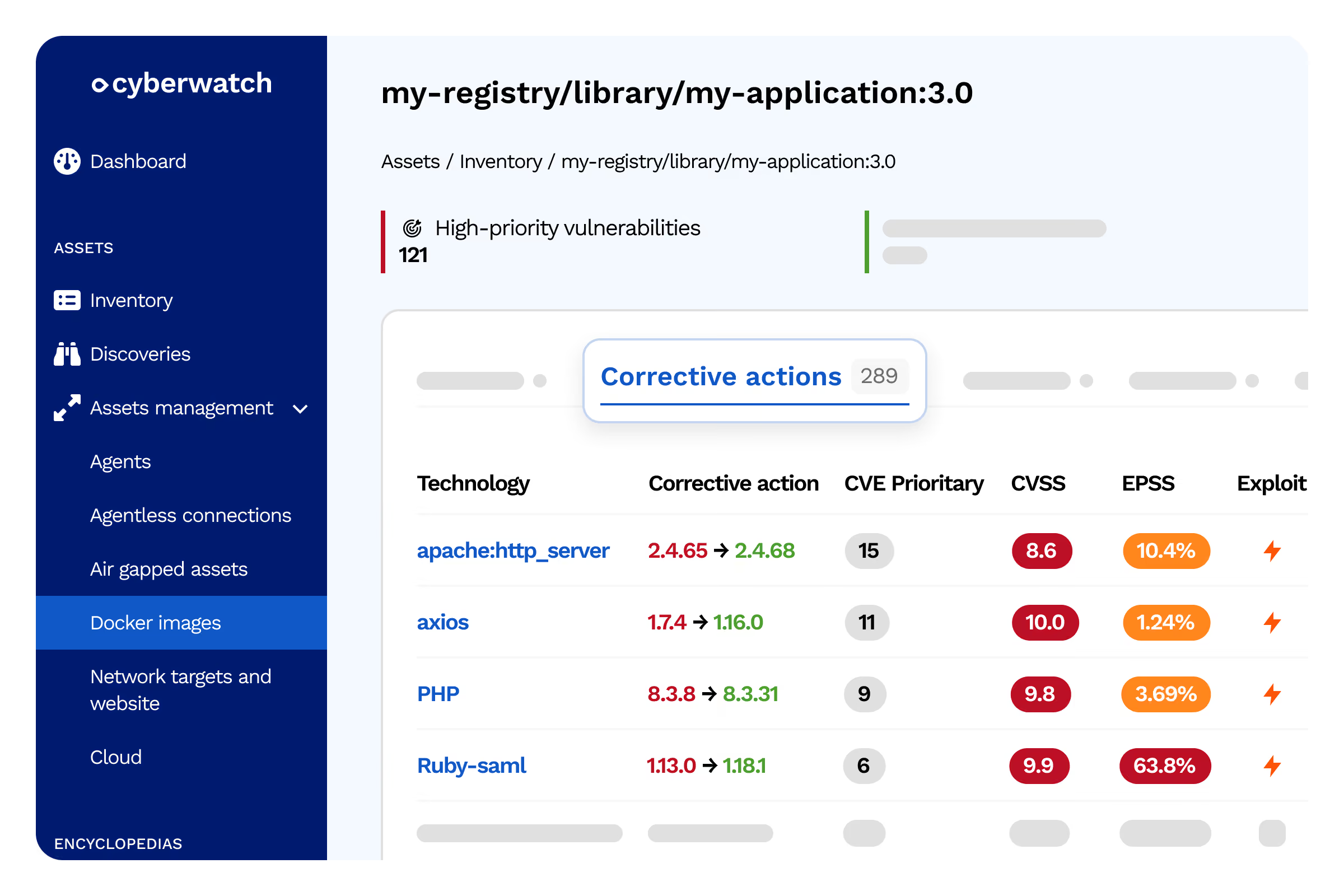
Transitive dependencies
Visibility into all dependency levels
- Item 1
- Item 2
- Item 3
Real-time CVEs
Automatic matching with vulnerability databases
- Item 1
- Item 2
- Item 3
EOL Detection — End of Life
Identify end-of-life components and unmaintained frameworks before they become a threat.
Technology identification
Recognize frameworks, CMS, JavaScript libraries, and web servers
- Item 1
- Item 2
- Item 3
EOL database
Tracking end-of-support dates
- Item 1
- Item 2
- Item 3
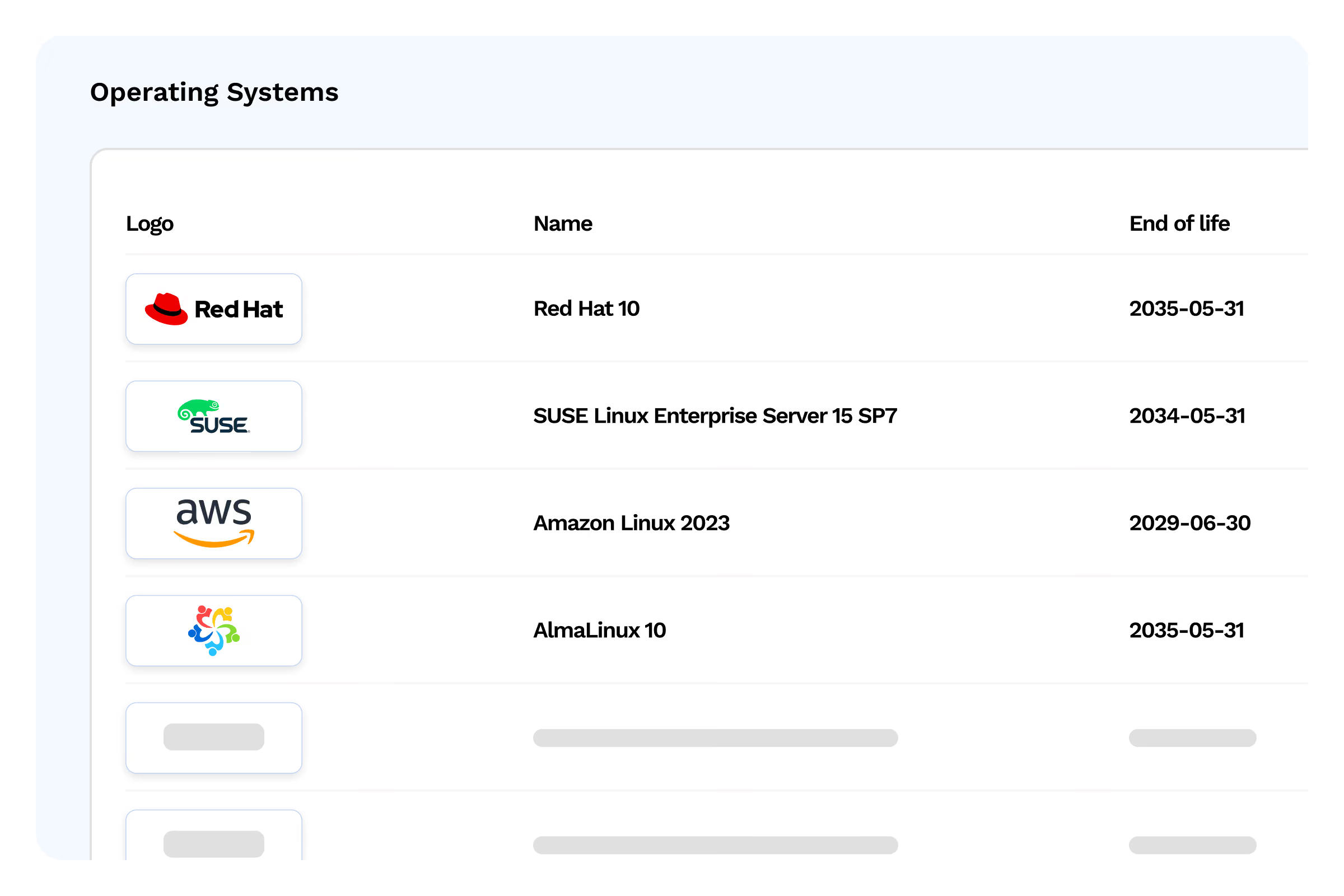
Proactive alerts
Notification before official end-of-life
- Item 1
- Item 2
- Item 3
Migration plan
Automatic replacement recommendations
- Item 1
- Item 2
- Item 3
SBOM Generation
Generate component manifests in CycloneDX, SPDX, or CSV for NIS2 and CRA compliance.
Technology identification
Detection of frameworks, CMS, JavaScript libraries, and web servers
- Item 1
- Item 2
- Item 3
Standard formats
CycloneDX, SPDX, CSV for regulatory compliance
- Item 1
- Item 2
- Item 3
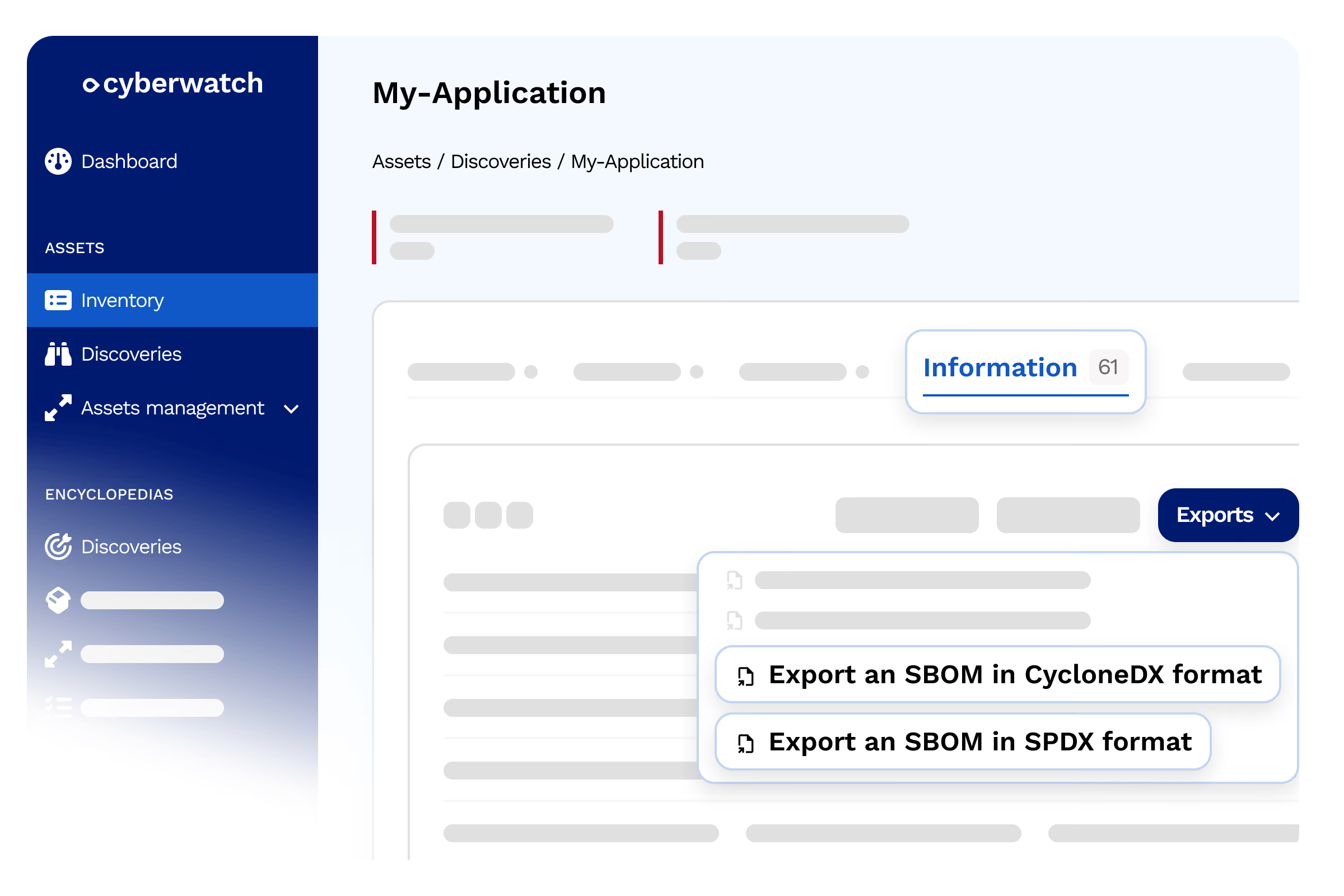
Full inventory
All direct and transitive dependencies
- Item 1
- Item 2
- Item 3
Automation
Generated on every build with no manual effort
- Item 1
- Item 2
- Item 3
DAST — Dynamic testing
Detect OWASP Top 10 application vulnerabilities by testing the running application.
HTTP Headers & CSP
Detection of insecure configurations (Content Security Policy, cookie flags, missing headers)
- Item 1
- Item 2
- Item 3
Technology identification
Detection of frameworks, CMS, JavaScript libraries, and web servers
- Item 1
- Item 2
- Item 3
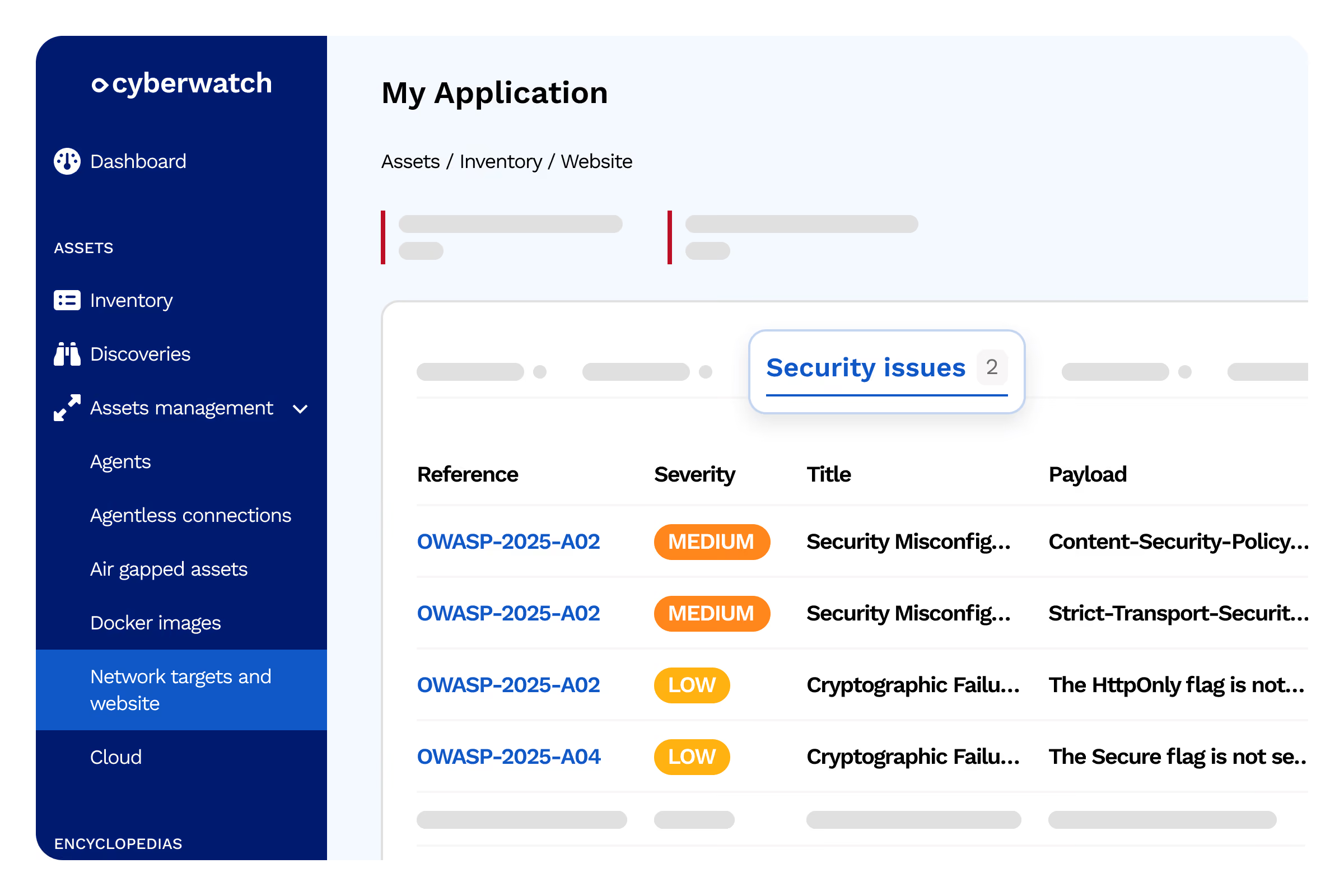
OWASP coverage
SQL injection, XSS, CSRF, authentication, session
- Item 1
- Item 2
- Item 3
No source required
No source code access needed
- Item 1
- Item 2
- Item 3
Recommendations
Detailed remediation advice for each vulnerability
- Item 1
- Item 2
- Item 3
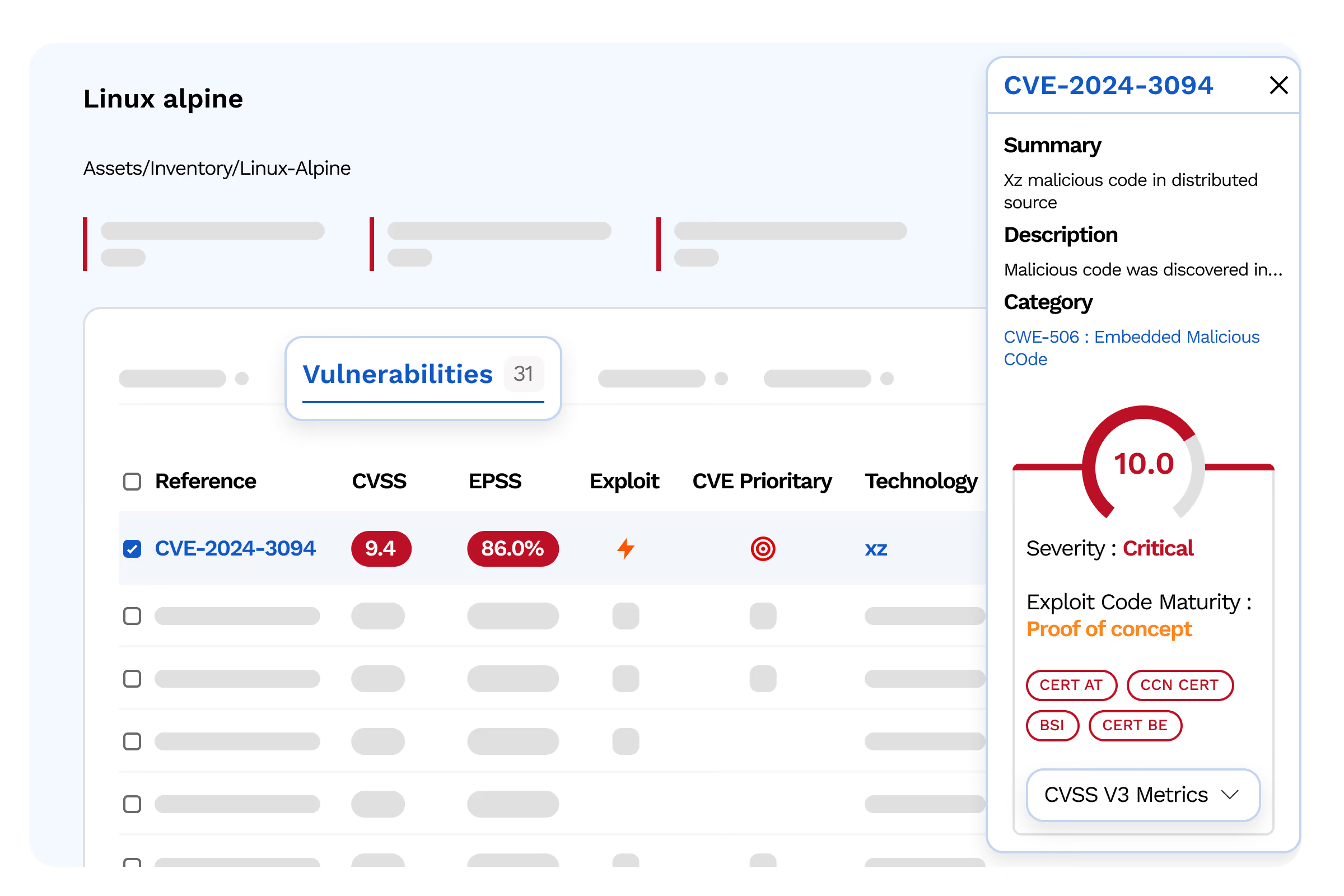
Compromised package detection
Ensure no malicious packages are present in your production infrastructure. Continuous analysis of dependencies installed via npm, PyPI, NuGet, Maven, and RubyGems.
HTTP Headers & CSP
Detection of insecure configurations (Content Security Policy, cookie flags, missing headers)
- Item 1
- Item 2
- Item 3
Technology identification
Recognition of frameworks, CMS, JavaScript libraries, and web servers
- Item 1
- Item 2
- Item 3
Existing infrastructure audit
Identify compromised packages already deployed in your environments
- Item 1
- Item 2
- Item 3
Malicious code detection
Identifying dependencies containing obfuscated code or suspicious behavior
- Item 1
- Item 2
- Item 3
Real-time alerts
Immediate notification when an installed package is flagged as compromised
- Item 1
- Item 2
- Item 3
images and containers
Image and container scanning
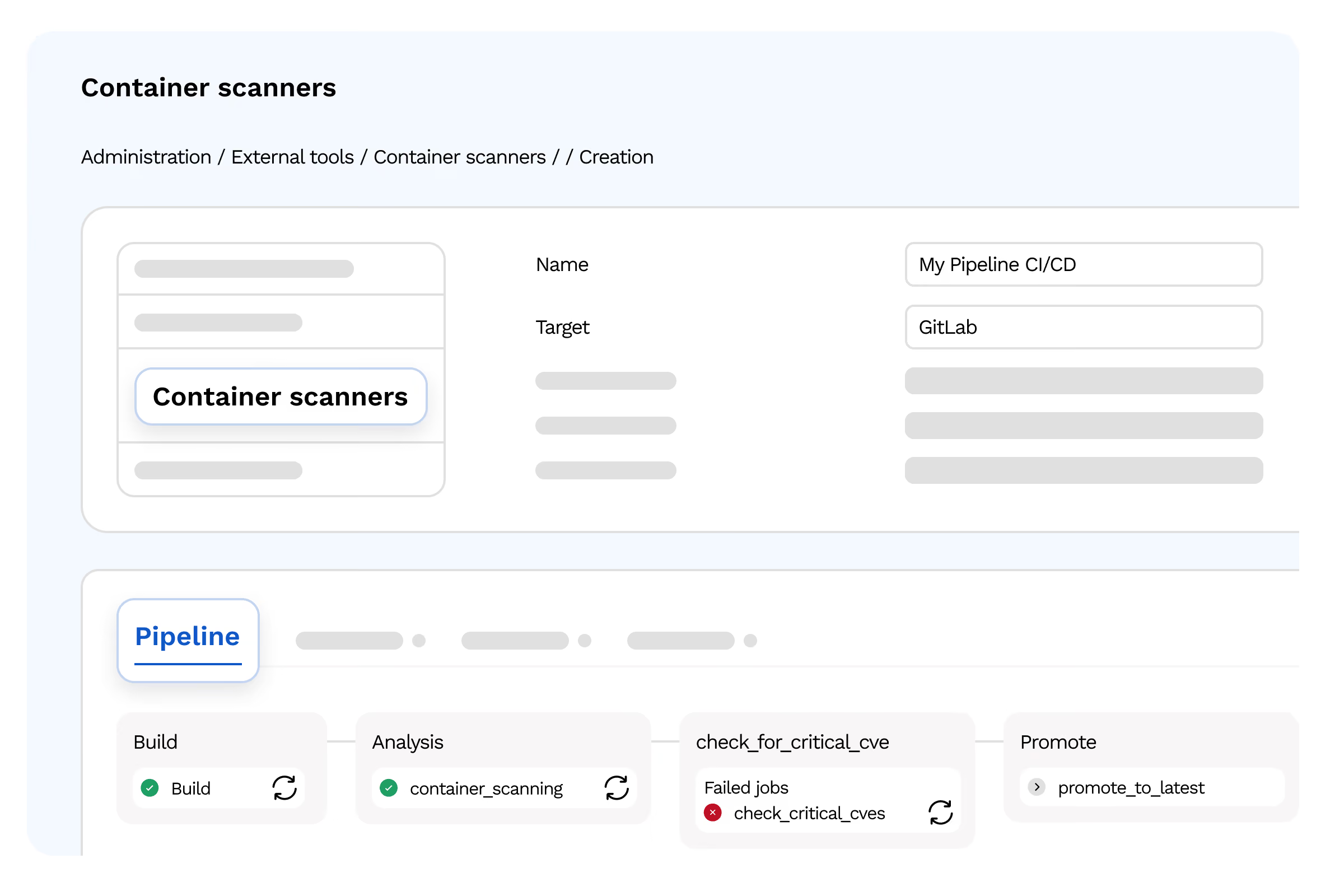
Scan Docker images in registries or CI/CD pipelines and block non-compliant deployments.
CI/CD Integration
Hooks in Docker, Kubernetes, and Harbor pipelines
- Item 1
- Item 2
- Item 3
Threshold policies
Automatic blocking of non-compliant deployments
- Item 1
- Item 2
- Item 3
Image history
Full traceability of deployed versions
- Item 1
- Item 2
- Item 3
Image SBOM
Automatic inventory of dependencies embedded in each image
- Item 1
- Item 2
- Item 3
Testimonials
The platform centralizes both our PCI compliance for online billing operations and our broader IT vulnerability management, which simplifies our security oversight.

CISO, energy
CISO

Quarterly ASV scans and the supplementary pentest provide us with a comprehensive view of our PCI DSS compliance, with reports that are directly actionable for our QSA auditors.
Payment Security Manager, Finance
Payment Security Manager
Hardening our configurations according to CIS Benchmarks allowed us to close entry points we hadn't even considered, all without interrupting our production.
Systems Administrator, industry
Systems and Network Administrator
Continuous auditing of our Active Directory revealed several poorly managed privileged accounts, which we were able to remediate quickly.
CISO, healthcare
CISO
Pouvoir déployer une console complète isolée d'Internet, avec mise à jour manuelle de la base de vulnérabilités, était un prérequis pour certains de nos environnements les plus critiques.
Exemple à remplacer — Responsable sécurité, secteur public
Responsable sécurité des systèmes d'information
Le mode air-gap totalement déconnecté correspond exactement à nos exigences de sécurité pour les systèmes les plus sensibles, sans compromis sur la qualité de la détection.
Exemple à remplacer — Responsable SSI, défense
Responsable de la sécurité des systèmes d'information
Le suivi de notre conformité NIS2 est désormais centralisé et actualisé en continu, ce qui simplifie considérablement nos rapports aux autorités compétentes.
Exemple à remplacer — RSSI, énergie
RSSI
La génération automatisée de preuves d'audit nous fait gagner un temps précieux lors de nos revues de conformité DORA et de nos échanges avec nos auditeurs.
Exemple à remplacer — Responsable conformité, finance
Responsable conformité
La formation Cyberwatch Certified Professional a permis à nos équipes de monter en compétence rapidement et d'exploiter pleinement les fonctionnalités de remédiation de la plateforme.
Exemple à remplacer — Responsable IT, industrie
Responsable infrastructure IT
Le patch management intégré et les tickets générés automatiquement dans notre outil ITSM ont nettement réduit nos délais de correction.
Exemple à remplacer — DSI, secteur public
DSI
Avec des centaines de dispositifs médicaux à surveiller, la priorisation par criticité métier nous permet de ne pas nous disperser tout en respectant la continuité des soins.
Exemple à remplacer — RSSI, santé
RSSI
Le scoring contextuel nous aide à concentrer nos équipes sur les vulnérabilités qui présentent un risque réel pour nos installations, plutôt que de traiter des milliers de CVE sans distinction.
Exemple à remplacer — Responsable cybersécurité, énergie
Responsable cybersécurité
Pouvoir cartographier nos environnements sensibles sans connexion réseau permanente était une exigence non négociable. Cyberwatch répond à cette contrainte tout en gardant un inventaire à jour.
Exemple à remplacer — Officier sécurité, défense
Officier de sécurité des systèmes d'information
La cartographie automatique de nos actifs nous a permis de découvrir des serveurs oubliés que nos audits précédents n'avaient jamais identifiés. C'est un vrai gain de visibilité sur notre Shadow IT.
Exemple à remplacer — Responsable sécurité, finance
Responsable sécurité IT
L'accompagnement de l'équipe Cyberwatch a été déterminant pour déployer la plateforme sur nos sites de production sans perturber nos lignes. Le support dédié répond vite et comprend nos contraintes industrielles.
Exemple à remplacer — DSI, industrie
DSI
Avec Cyberwatch, nous avons enfin une vue exhaustive de notre parc informatique et pouvons prioriser nos actions de remédiation selon un risque réel plutôt qu'une simple liste de CVE. La plateforme s'intègre bien à nos contraintes de souveraineté.
Exemple à remplacer — RSSI, secteur public
RSSI
FAQ
From asset mapping to automated remediation.
What is SecDevOps?
SecDevOps involves integrating security throughout the entire DevOps chain, from the design to the operation of software or a digital service. The goal is to treat security not as a final step, but as a shared responsibility among developers, security teams, and operations. This is achieved through automated controls, security testing in CI/CD pipelines, secret management, code analysis, and continuous environment monitoring.
What is SCA (Software Composition Analysis)?
SCA is a process for analyzing open-source and third-party components used in an application. It helps identify vulnerable components, prioritize updates, and reduce risks associated with external dependencies. Cyberwatch covers all major ecosystems (npm, yarn, Maven, Composer, pip, NuGet, RubyGems, Go) to detect known vulnerabilities before they reach production.
What is an End of Life (EOL) component and why should it be detected?
An End of Life (EOL) component is software, a library, a system, or a version that is no longer maintained by its publisher or community. It no longer receives updates, including security patches. Even without a known vulnerability, it represents a risk. Cyberwatch identifies these components so they can be replaced before they become an exploitable threat.
What is an SBOM and why has it become virtually mandatory?
A Software Bill of Materials (SBOM) is a comprehensive inventory of all software components within an application, including open-source libraries, direct and transitive dependencies, exact versions, licenses, origins, and sometimes cryptographic hashes. Cyberwatch generates SBOMs in CycloneDX, SPDX, or CSV formats. SBOMs are required by regulations such as NIS2 and the Cyber Resilience Act (CRA) to ensure traceability and transparency across the software supply chain.
How does Cyberwatch detect compromised or malicious packages?
Cyberwatch continuously analyzes the dependencies installed on your production infrastructure against known malicious package databases on npm, PyPI, NuGet, Maven, and RubyGems. This detection protects against supply chain attacks such as code injection or the hijacking of legitimate packages by malicious actors.
What is the difference between SAST, DAST, and SCA?
SAST (Static Application Security Testing) analyzes source code, binaries, or bytecode without executing the application. It detects flaws in development logic, such as injections, improper validation, or exposed secrets. DAST (Dynamic Application Security Testing) tests the application while it is running, from the outside, just as an attacker would. It identifies vulnerabilities that are visible during execution. SCA (Software Composition Analysis) analyzes third-party components and open-source dependencies to identify known vulnerabilities, risky licenses, and outdated versions.
Can DAST be integrated directly into a CI/CD pipeline?
Yes, Cyberwatch DAST tests your running application to detect OWASP Top 10 vulnerabilities and can be natively integrated into your CI/CD pipeline. This allows you to automatically block non-compliant deployments before they reach production, in line with a "Shift Left" approach to application security.
Can Cyberwatch scan container images before they are deployed?
Yes, Cyberwatch analyzes Docker images directly within your registries or your CI/CD pipeline before they go into production. This analysis detects vulnerabilities and risky components within the image, allowing you to block non-compliant deployments and secure your delivery chain from end to end.