
Vulnerability prioritization: from detection to decision
With tens of thousands of CVEs published every year, and thousands detected across your infrastructure, how do you decide which ones to fix first? Cyberwatch combines the business context of your assets, risk scores, and threat intelligence to turn an unmanageable volume of vulnerabilities into a clear action plan.
The volume of CVEs makes manual management impossible
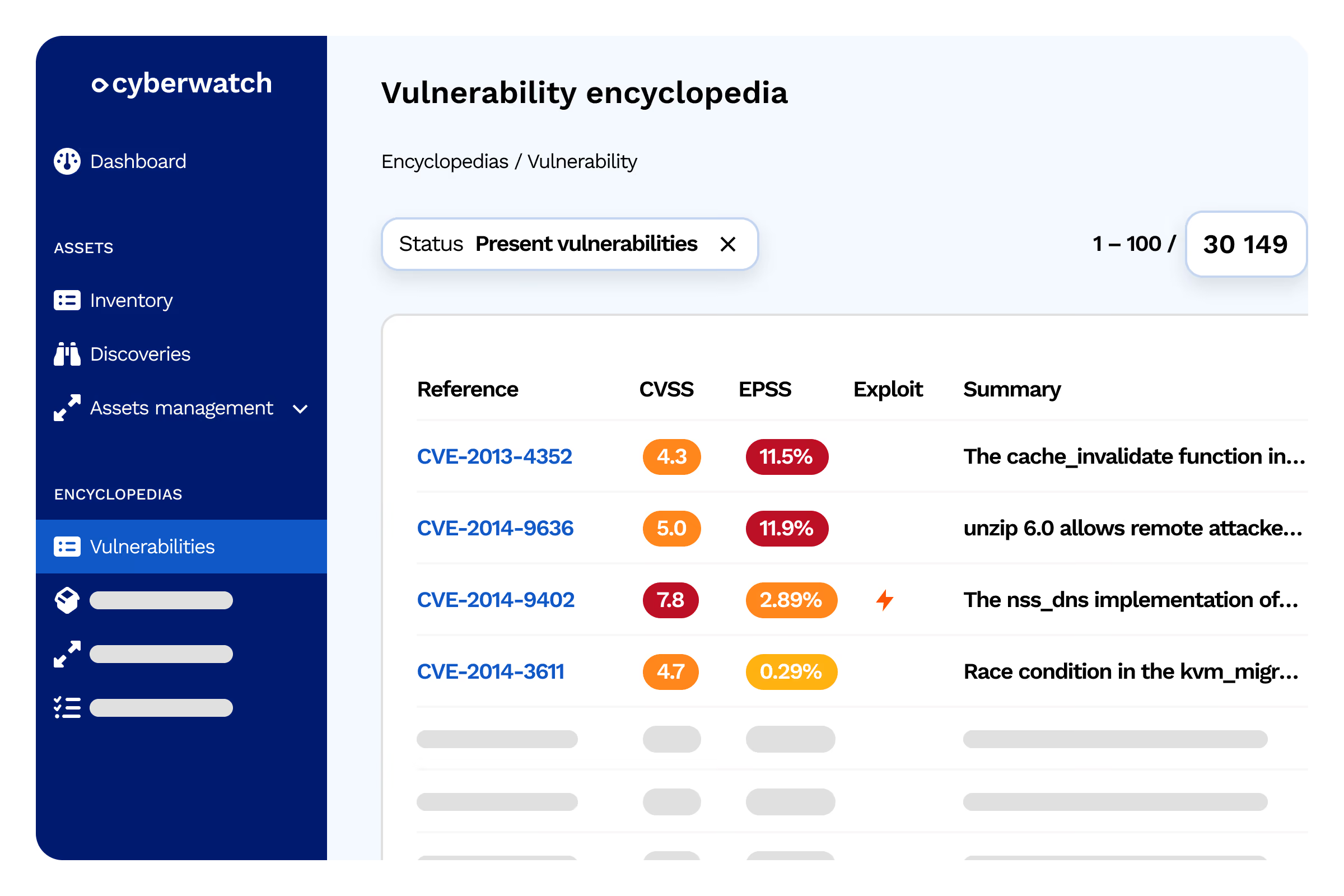
Since the arrival of new AI models, the number of published CVEs has been increasing exponentially. Security teams are facing constant noise: the majority of detected vulnerabilities are not exploitable in your specific context. Without a structured prioritization policy, resources are wasted on low-impact patches while critical flaws remain open.
The traditional approach of relying solely on CVSS scores is insufficient: a 9.8 score on an isolated test server does not have the same impact as a 7.5 on your production payment server.
Shadow IT / OT

Unlisted devices connected to the network without oversight act as invisible entry points for attackers.
Obsolete manual inventories

Excel files and self-reported inventories never reflect the reality on the ground. The gaps widen with every maintenance intervention.
Demanding regulations

NIS2, LPM, IEC 62443: regulations require an up-to-date inventory of critical industrial assets, complete with traceability and audit trails.
scoring
Multi-criteria contextual scoring
Each vulnerability is assessed within the actual context of your infrastructure
CVSS v3/v4 Score
Technical severity of the vulnerability according to the NVD database
- Item 1
- Item 2
- Item 3
EPSS Score
Probability of active exploitation within the next 30 days, based on FIRST data
- Item 1
- Item 2
- Item 3
Business criticality of the asset
CIA score (Confidentiality, Integrity, Availability) defined by your teams based on business importance
- Item 1
- Item 2
- Item 3
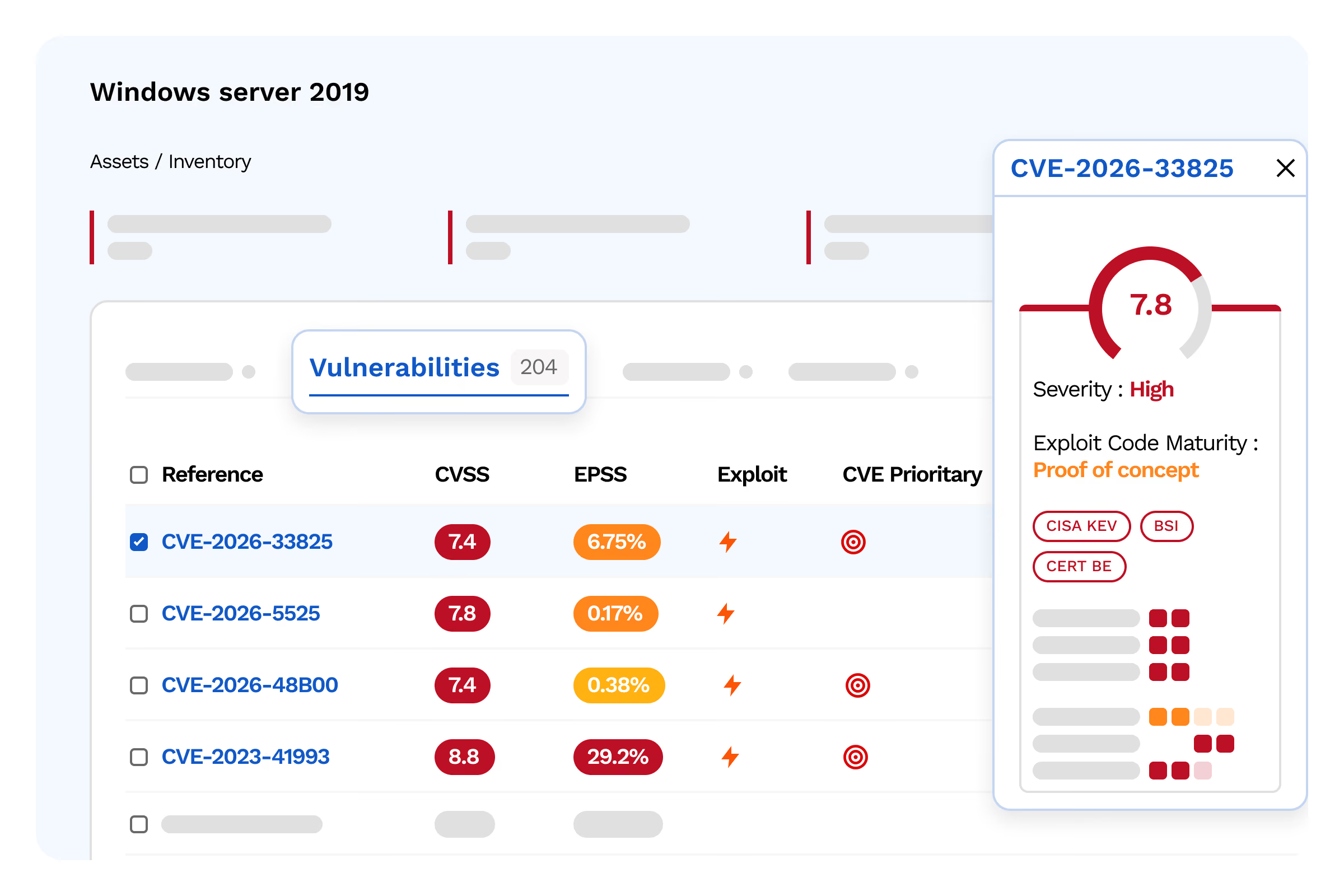
Exploit available
Detection of vulnerabilities with a public exploit (Metasploit, ExploitDB, GitHub PoC)
- Item 1
- Item 2
- Item 3
Network exposure
Assets exposed to the Internet are prioritized over internal assets
- Item 1
- Item 2
- Item 3
CERT-FR and ANSSI alerts
Vulnerabilities flagged by French authorities are automatically reported
- Item 1
- Item 2
- Item 3
prioritization
Customizable prioritization strategies
Cyberwatch allows you to define your own prioritization strategies tailored to your security policy and operational constraints.
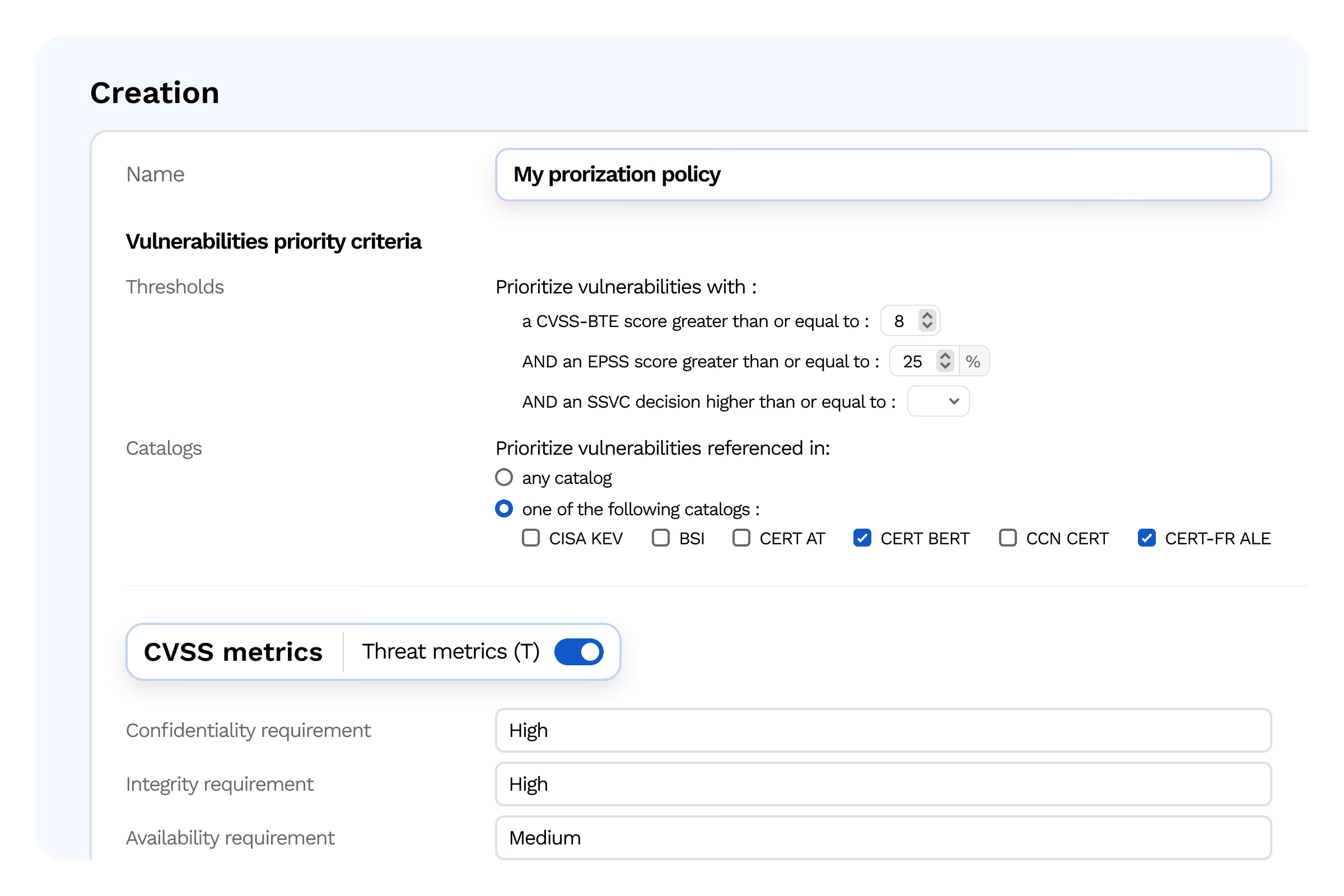
Custom rules
Create scoring rules that weight criteria according to your priorities: "any EPSS vulnerability > 0.5 on a production asset = critical"
- Item 1
- Item 2
- Item 3
Prioritization groups
Apply different strategies by scope: production is treated as a priority, while dev has a more flexible SLA
- Item 1
- Item 2
- Item 3
Remediation SLA
Set remediation deadlines based on severity levels and track compliance via dashboards
- Item 1
- Item 2
- Item 3
Documented exceptions
Accept risk for a vulnerability with justification, owner, and expiration date
- Item 1
- Item 2
- Item 3
decision & management
Decision support and risk management
Real-time dashboards
Visualize your entire fleet or specific asset groups in real time, with tracking of key KPIs and their evolution over time (priority CVEs, compliance levels, remediation time, etc.) for precise security management.
Remediation plans
Generate prioritized action plans: which fixes to deploy, in what order, and on which assets. ITSM integration to automatically create remediation tickets.
Executive reports
Automated executive and operational reports: risk trends, SLA compliance, scan coverage, and regulatory compliance. PDF and API exports.
Prioritization and decision-making turn raw data into concrete actions — focus your efforts where the risk is real.
Testimonials
Avec des centaines de dispositifs médicaux à surveiller, la priorisation par criticité métier nous permet de ne pas nous disperser tout en respectant la continuité des soins.

Exemple à remplacer — RSSI, santé
RSSI

FAQ
From asset mapping to automated remediation.
What is the EPSS score and how does it differ from CVSS?
L'EPSS (Exploit Prediction Scoring System) estime la probabilité qu'une vulnérabilité soit exploitée dans les 30 jours, à partir de données réelles d'exploitation observées. Contrairement au CVSS (Common Vulnerability Scoring System), qui mesure la sévérité théorique d'une faille, l'EPSS répond à une question différente et complémentaire : quelle est la probabilité réelle qu'elle soit utilisée par un attaquant ?
What is CVSS-BTE and why should you use it?
The CVSS-BTE (Base Temporal Environmental) enhances the base CVSS score with temporal metrics (exploit availability, patch status) and environmental factors specific to your context. It allows you to adjust the generic severity of a CVE to the reality of your infrastructure, rather than relying on a static score that is identical for every environment.
What is the CISA-KEV catalog?
The CISA-KEV (Known Exploited Vulnerabilities) catalog is maintained by the U.S. Cybersecurity and Infrastructure Security Agency (CISA) and lists vulnerabilities confirmed to be actively exploited by attackers. A vulnerability included in this catalog represents an immediate and proven risk, making it a strong signal for prioritization, regardless of its theoretical CVSS score.
How are CERT-FR alerts integrated into prioritization?
CERT-FR publishes security advisories and alerts regarding vulnerabilities and attack campaigns affecting French organizations. Cyberwatch integrates this national threat intelligence source to prioritize flaws that are actively exploited or targeted in France, complementing international sources such as CISA-KEV.
How does Cyberwatch prioritize vulnerabilities?
Cyberwatch prioritizes vulnerabilities using a configurable policy that combines several criteria: severity (CVSS), exploitability (EPSS), presence in catalogs of exploited or monitored vulnerabilities, and impact on confidentiality, integrity, and availability. The goal is to highlight the flaws that need to be addressed first, based on the actual risk to the organization. This prioritization helps teams focus their efforts on vulnerabilities that are critical, exploitable, or expose sensitive or essential IT assets.
What is contextual scoring at Cyberwatch?
Contextual scoring evaluates each vulnerability not in isolation, but based on the business criticality of the affected asset, its actual exposure (internal, external, public access), and the protections already in place. Two identical vulnerabilities can therefore be assigned very different priorities depending on whether they affect a test server or a critical production system.
How does threat intelligence improve patch prioritization?
Threat intelligence aggregates external sources (CISA-KEV, CERT-FR, public exploit databases) to identify vulnerabilities actively exploited in the real world. By cross-referencing this with the context of your IT assets, it allows you to distinguish between theoretically critical flaws and concrete threats, enabling you to focus remediation efforts on risks that are actually being exploited.